








Florida Hosing Crisis
Florida's condo market is collapsing under new regulations, aging buildings, and rising costs. Sales and prices are down, inventory is surging, and thousands of units are blacklisted from financing. Here's what it means for the state's housing market and economy.

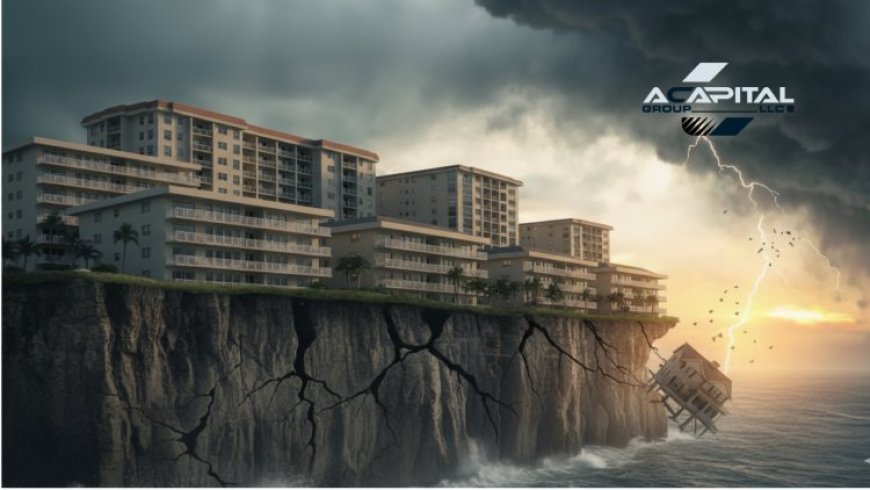
I've been digging into Florida's condo crisis, and the numbers I found show this market is in complete meltdown mode.
Summary:
Florida's condo market is facing a major crisis, with 60% of its 1.5 million units now subject to strict new inspection and repair funding laws. Condo sales are down 25%, prices have dropped 8%, and listings have surged to 80,000 units — leading to serious oversupply. With over 1,400 buildings blacklisted by Fannie Mae, many buyers are avoiding condos altogether, especially given skyrocketing HOA fees and special assessments that often exceed property values. This has created a financial death spiral, with broader implications for Florida's real estate-driven economy. Recovery may take until late 2026, depending on mortgage rates and regulatory burdens.
The scale blew me away:
Florida has 1.5 million condo units, making up 20% of all condos nationwide. Here's the kicker: 900,000 units (60% of the state's stock) are over 30 years old and subject to the new inspection requirements. We're not talking about a few buildings. This affects roughly two-thirds of all condo units in the state.
The market collapse is real:
Condo sales are down 25% from 2018-19 levels, prices have fallen 8% from their peak, and there are now 80,000 condos for sale (up 35% from last year). That's over 10 months of inventory supply compared to 5.6 months for single-family homes. When I see inventory numbers like that, I know we're in serious oversupply territory.
Why nobody wants these properties:
Over 1,400 condo associations are now on Fannie Mae's mortgage blacklist, with about half in the Miami metro area alone. When lenders won't finance purchases, you get rock-bottom prices because only cash buyers will touch them. And cash buyers understand they're buying massive future liabilities.
The financial death spiral:
HOA fees are rising far above inflation across Florida metro areas. The post-Surfside law requires not just inspections but funding reserves for repairs. Many buildings need special assessments of $50,000 to $100,000+ per unit. When your special assessment costs more than your unit's value, the math breaks completely.
The economic impact:
Here's what most people miss: condos account for 25% of all home sales in Florida versus 10% nationwide. When this large a segment of the housing market collapses, it creates significant economic drag for the entire state. Florida's economy depends heavily on real estate activity.
My timeline:
I expect this weakness to last about two years, with potential recovery by late 2026 if mortgage rates fall to 5.5-6% and people start moving to Florida again. But that assumes regulatory compliance costs become manageable, which isn't guaranteed.
Bottom line:
This shows what happens when regulatory compliance costs exceed property values. These aren't just market corrections. They're economically stranded assets where the underlying math simply doesn't work anymore.
What's Your Reaction?
 Like
0
Like
0
 Dislike
0
Dislike
0
 Love
0
Love
0
 Funny
0
Funny
0
 Angry
0
Angry
0
 Sad
0
Sad
0
 Wow
0
Wow
0